
Wolbachia as one of the strategies to fight dengue
Other than Wolbachia mosquitoes, several other methods are also used by the Ministry of Health to combat dengue, such as:
Larviciding (Temephos, BTI, Pyriproxyfen)
Fogging (Pyrethroids, Organophosphates)
Residual spraying (Deltamethrin)
While these conventional techniques aim to reduce mosquito numbers in general, the Wolbachia technique aims to change mosquito competence. Wolbachia mosquitoes do not transmit dengue and thus, by replacing the wild Aedes population, they can stop the dengue transmission.
What are the criteria for the residential areas chosen for Wolbachia project?
Before the release process, several criteria are evaluated to ensure that the area is suitable for the Wolbachia project, namely:
The area has a high incidence of dengue cases (a.k.a dengue hotspots)
There is a high density of Aedes aegypti mosquitoes at the area
The community agrees and supports the release process
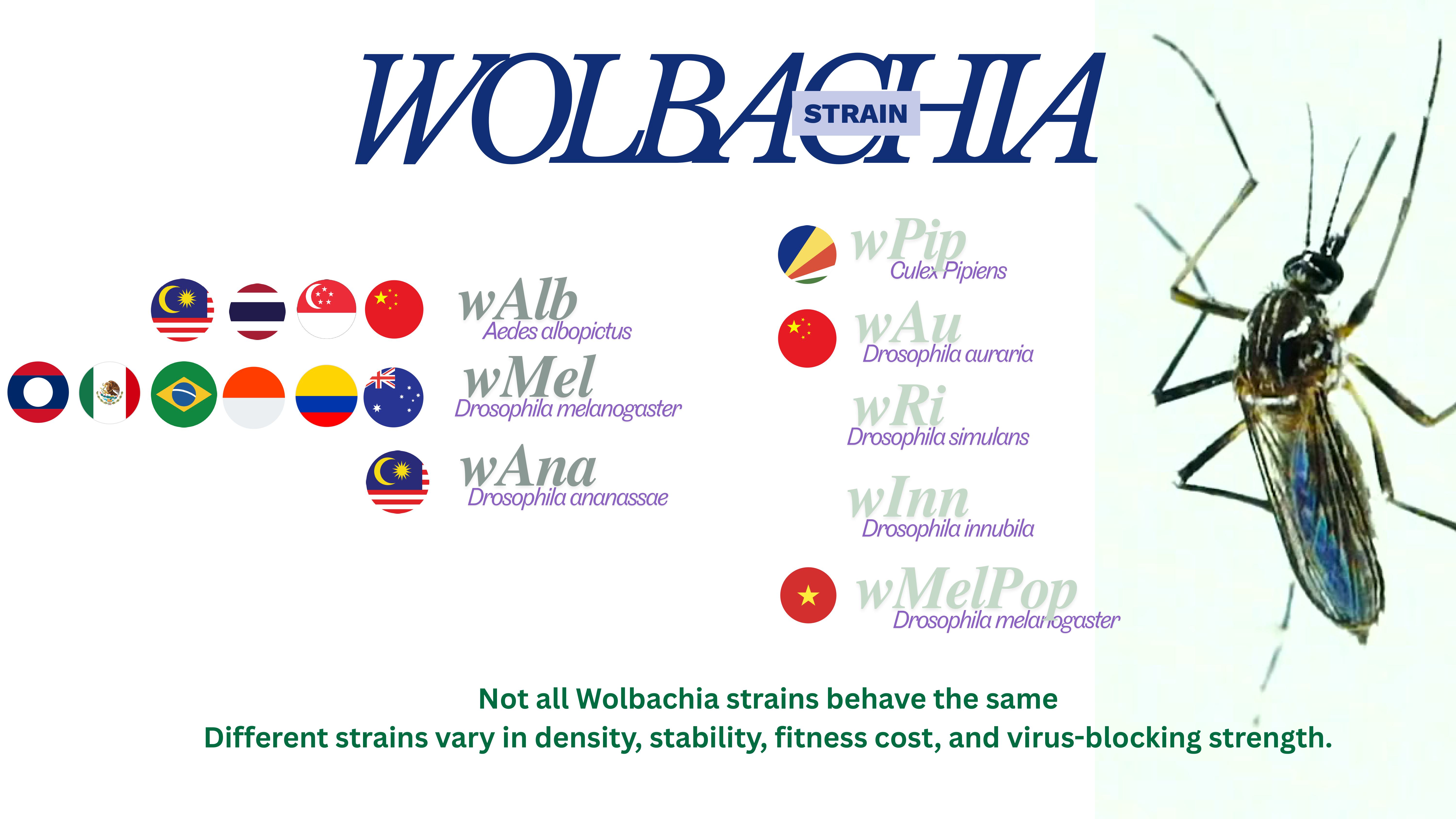
Wolbachia strains used in Malaysia
Several Wolbachia strains are used in different countries. Currently, two strains are used in Malaysa: wAlbB and wAna, which originated from Aedes albopictus and Drosophila ananassae respectively.